Wednesday, 24 December 2014

TERM OF THE DAY - " BIG DATA "

“ Big Data ”


Big Data as a term refers to data in such amounts that cannot be handled or analysed using traditional data management processes . Today , most organizations handled huge wealth of data , but they are not optimally utilized due to the data being in in-organized , raw form . Big Data refers to systematic techniques for handling and processing such vast amounts of data .
Three basic characteristics that define Big data are – volume , variety and velocity . Today the
volume of data is exploding rapidly whilst the percentage of data analysed is falling down . Variety of data leads to fundamental shift in traditional data handling processes . Velocity refers to the pace with which data is generated and handled .
Post cloud , Big Data is the biggest trend setter for the IT world !!

Monday, 22 December 2014

TERM OF THE DAY - " ALOHA "

" ALOHA "

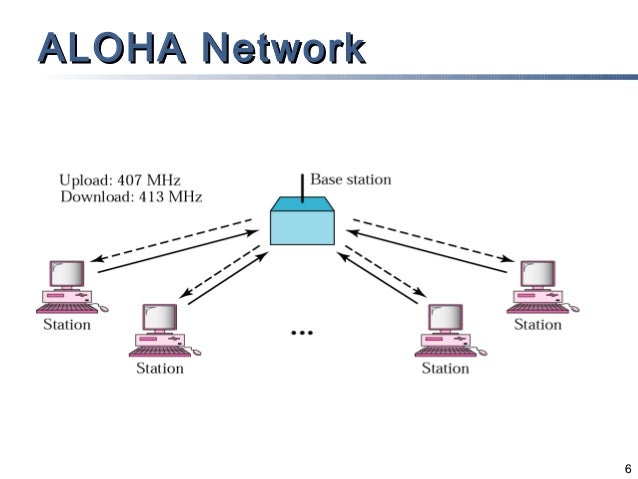
ALOHA refers to the pioneering networking method first used in the University of Hawaii in 1971 as the first demonstration of wireless communication . It involves medium access using the same
experimental UHF frequency . It laid the basis for development of Ethernet and Wi-Fi Networking . It was used at a time when there wasn’t any commercial distribution of communication frequency between two computers . It is also known as Aloha-Net .

Wednesday, 22 October 2014

TERM OF THE DAY - "MULTI-THREADING"


Threads refer to the smallest and simplest executable segment a programmed instruction . Threads are independently managed by a scheduler ( typically part of an operating system ) . Any process consists of multiple threads , which share the resources such as memory allocations . Multi-threading enables time-division multiplexing , where the processor switches between various software threads , thereby resulting in  several processes to be simultaneously executed by the operating system .
Multi-threading has several advantages :
1               Multi-threading results in enhanced responsiveness .
2              Faster execution .
3             Optimized use of System variables .
4              Lesser resource intensive .
5             Simplified sharing and parallelism .


Monday, 13 October 2014

Term of the day – Netapp Storage

Netapp storage refers to both hardware and software solutions provided by Netapp for data storage to various organisations .Hardware and software work together to provide higher efficiency and low costs across all tiers of data storage equipment .It aims to reduce bloated space which is necessary to store IT data such as snapshot copies , backup and failover protection .

 It includes different storage appliance solution such as different fabric attached storage (FAS) hybrid storage arrays , which are meant to be connected  to the cloud using a unified architecture , which includes a broad set of NAS and SAN workloads faster than entry-level  hybrid arrays .This also includes the storage operating system Data OnTap , using a unified storage architecture that is meant to drive efficiency in the infrastructure layer in order to help control cost and increase efficiency .

This is very important for cloud computing and virtualised environment .

Thursday, 4 September 2014

TERM OF THE DAY – Baby Boomer Compatibility

typical baby boomer user .


It is a slang term used , predominantly for IT services companies , using outdated technologies , to come in terms of being usable and understandable for devices for the baby boomer generation . It is mostly a demographic division , widespread in the United States , who are remarkably laggards in coming to terms with technological advancements . There are many companies catering to this generation , as they are also
predominantly cash-stacked demography .

Mostly , this baby boomer generation came up in the late 1960’s with the advent of modern computational technology . Some minute steps involved in catering to the baby boomers is like a touch interface , or larger  fonts . But , in general , this increased compatibility comes with reduced functionality .

Friday, 8 August 2014

WAP Gateway

Wireless Application Protocol Gateway is a part of protocol for protected use of internet. In WAP, internet access requests are sent through the gateway for security purposes. Typically it is a server that acts as an intermediary in an access request. The server obtains data in HTTP format, and encrypts it before transmission to the end-point user. It employs a protocol called “Wireless Mark-up Language “.

It generally sits between mobile devices using the WAP protocol and the World Wide Web .

Monday, 4 August 2014

Term Of The Day - WIPS

Wireless Intrusion Prevention System (WIPS)


WIPS prevents unauthorized network access by monitoring a radio spectrum and looking for unusual network activity .  It helps to identify rouge access points or help security professionals prepare for possible spoofing attacks .
It can help prevent system vulnerability through the use of outside wireless router or other equipment .WIPS does this  by  whether signals are routine part of the network or legitimate access points .Security systems then build response to potential intrusions .